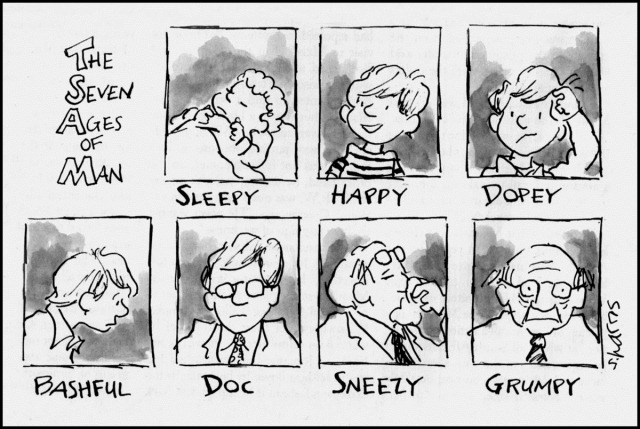
All the world’s a stage,
And all the men and women merely players,
They have their exits and entrances,
And one man in his time plays many parts,
His acts being seven ages.
William Shakespeare, “As you like it”
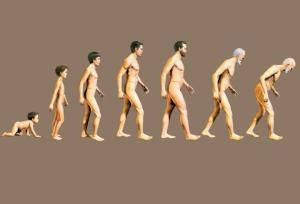
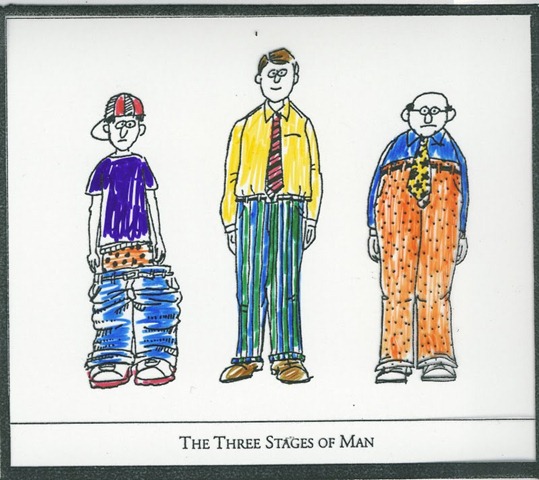
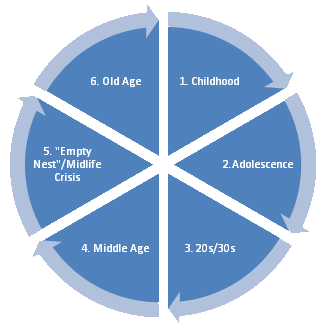
I don’t want to forget one of the major reasons I started to think about pilgrimage more deeply; that is that it becomes a useful metaphor for our journey through life, and especially for our spirituality, our way to live out a relationship with God, to relate to others and to ‘become’ our world view. So I’ve taken my original wheel diagram about the stages of a (geographical) pilgrimage and adapted it to show the stages of the journey we call the human life. Shakespeare had 7 stages; I need to stick to 6 in order to give coherence to my model!

Childhood, a time of learning and discovery, of discipline imposed from without. A time when we begin to form opinions on people, the world around us and our lives, within the context of our family, other significant adults (teachers etc) and a circle of friends. In some ways, a time of preparation for the rest of the journey of life.
Adolescence, a time of questioning, of pushing boundaries, of wrestling to separate ‘what I think’ from ‘what you taught me to think’. A time for breaking old ties and forging new ones. For a time uncertainty replaces old certainties, and an external air of confidence and superiority belies a whirling maelstrom that lies within. This is a time of leaving, of setting out on ones own journey, influenced for good or ill by what has made the deepest impression during our childhood.
During the 20s and 30s we strive to make a mark upon the world, to make a name for ourselves, to establish ourselves in the world of work. Often we are too busy to think deeply about the choices we make, the decisions we reach. If we’re not careful we may be driven by life, rather than living it. We may think about marriage and children, or we may decide to focus on our career. We are busy living out of who we think we are, based on everything that has gone before. We may not have thought much about it, but we will be have developed values, goals and aspirations which will be leading or driving us forwards, until we come up against a barrier that will divert us, disappoint us, disillusion us, and cause us to either give up or press on more aggressively to overcome this inconvenience on our journey.
Although I’ve called the next stage Middle Age, it may occur at almost any age. It is akin to the pilgrimage stage of arrival, in the sense that we reach a point where we are happy with who we are, we have achieved a measure of success in the areas of life that are of importance and, if we wish/are able we can rest in and enjoy life. It is also the stage at which we face a choice: am I content to remain here, settled and risking stagnation or am I beginning to reconsider my options for the next stages of life; how might I ‘re-invent’ myself on the basis of all I’ve seen, learned, and experienced so far. An awareness of this dynamic is vital if we are to negotiate the next stage of life.
I struggled to find a neat name for this stage, which is the equivalent to the pilgrimage stage of ‘returning’; carries with it a sense of a return to reality, to a sense of what is and of what might have been. So for want of a better label I call it the Empty nest/Midlife crisis stage. At best, this is the stage at which we are able to truly grow and mature as individuals. We may well care less about achievement, about what people think and be able to live out of a centre of deep spiritual resources. Alternatively, if we have neglected to prepare ourselves during Middle Age we may simply find ourselves lost and uncertain as our reasons to be are slowly removed from us and we realise we’re not as young as we used to be. We may even be faced with thoughts about our own mortality as we begin to attend as many funerals as we do weddings and baptisms.
It is a stage when we need to learn how to cultivate deep relationships with our adult children (if we have them), to find appropriate ways to share the (hopefully) wisdom of age and experience. Perhaps too, more than any other stage, it is a time for deep appreciation of our successes and to find ways to come to terms with our failures in every area of life, but especially in our relationships. We may avoid becoming crabby, grumpy people who exude an air of ‘death’ and greyness and continue to be ‘life’ people, people who others want to be with and are glad to have around (this, I must confess, is not the media portrayal of aging people that we see very often today – it’s time we changed it!).
Finally, there comes the stage which parallels the pilgrimage stage of ‘remembering’, which I guess we call Old Age. Lest there is any danger that ‘remembering’ suggests that we are sedentary, with only a thought life which looks predominantly backwards rather than forwards, I want to remember that on a pilgrimage our memories of the journey are not simply a kind of nostalgic wallowing, but a time when our memories of what has been feed and sustain us as we prepare for the most exciting journey of all – the journey of our spirits after they leave our physical bodies; it is a time of contemplation. It is a tragedy that so many old people end up being isolated in our modern world at just the time when they have so much to give and share to help those who are earlier on the journey to take their steps more surely. Extended family, Christian Community and church (if they are a community or church where several generations are represented) provide a great setting for this very creative exchange to take place. And older people are still enlivened by sharing in the hopes and dreams of the young
If you want to share this: