Pilgrim Traveller

thoughts on life’s journey…

  • About

Day seven of forty…Authority and decisions

Posted by David Ward on 16/02/2016
Posted in: Communication, Community, Lent, Personal thoughts. Tagged: authority, character, Church, consensus, decision making, demonise, discernment, informed judgements, Jesus, leadership, power, praying. Leave a comment

decisions

Today’s passage, and the accompanying post are perhaps not as ‘nice’ as the ones that have come before..

“[14] Jesus was driving out a demon that was mute. When the demon left, the man who had been mute spoke, and the crowd was amazed. [15] But some of them said, “By Beelzebul, the prince of demons, he is driving out demons.” [16] Others tested him by asking for a sign from heaven.

[17] Jesus knew their thoughts and said to them: “Any kingdom divided against itself will be ruined, and a house divided against itself will fall. [18] If Satan is divided against himself, how can his kingdom stand? I say this because you claim that I drive out demons by Beelzebul. [19] Now if I drive out demons by Beelzebul, by whom do your followers drive them out? So then, they will be your judges. [20] But if I drive out demons by the finger of God, then the kingdom of God has come upon you.

[21] “When a strong man, fully armed, guards his own house, his possessions are safe. [22] But when someone stronger attacks and overpowers him, he takes away the armour in which the man trusted and divides up his plunder.

[23] “Whoever is not with me is against me, and whoever does not gather with me scatters.

[24] “When an impure spirit comes out of a person, it goes through arid places seeking rest and does not find it. Then it says, ‘I will return to the house I left.’ [25] When it arrives, it finds the house swept clean and put in order. [26] Then it goes and takes seven other spirits more wicked than itself, and they go in and live there. And the final condition of that person is worse than the first.”

[27] As Jesus was saying these things, a woman in the crowd called out, “Blessed is the mother who gave you birth and nursed you.”

[28] He replied, “Blessed rather are those who hear the word of God and obey it.”

Luke 11:14-328 NIV

One of the more disturbing things that I’ve come across, particularly in a certain sort of evangelical/charismatic “Christianity” is the tendency to use what you could call “God-talk” or “Demon-talk” to justify opinions and actions. If you have a bright idea for something that you want to see happen in the church it is all too easy to try to give it extra weight by saying, “God told me we should do this”, or “I have a witness in my spirit”. Whilst I’m not for a moment saying that God doesn’t speak, sometimes the temptation to use his name to squash argument is a difficult temptation to resist.

Perhaps more disturbing, as Jesus himself discovered, is our tendency to demonise people we disagree with and ideas we do not understand. To say, as I’ve heard said, “That idea is from the pit of hell itself!” is an efficient way of putting down people and churches with which we disagree. Once again, I have no doubt that sometimes evil personified, or for that matter our human nature, gets in the way of God’s work, but so often the reason behind statements like this is humiliation and a desire to hurt in order to neutralise dissent.

like JesusJesus suggests several ways by which we can make informed judgements about he source of spiritual authority. He says we should look at the character of the person making the claims or doing the work. We should look at the results of what is done or said…does the Kingdom grow and are lives changed for good as a result? Does what’s being said or done bring honour or dishonour to Jesus; is it consistent with the way he would have behaved and the things he would say?

clipart_board-meeting-300x225.jpgOne of the reasons God gave us the church is to protect us from people claiming sources of authority which give them power over people. A church with shared leadership offers protection from abuse from one powerful leader who has become self-serving rather than a servant of Jesus and of the people he has been given to lead. A church where the people share in the decision making process by vote or consensus offers a further check and balance. There is no such thing as a power vacuum…where good decision making is lacking evil easily creeps in.

The ideal is surely where Godly leaders and a praying, discerning membership work together to hear God’s voice and to act on what God says…I think that’s the point of Jesus statement at the end.


If you want to share this:

  • Email a link to a friend (Opens in new window) Email
  • Print (Opens in new window) Print
  • Share on Reddit (Opens in new window) Reddit
  • More
  • Share on Threads (Opens in new window) Threads
  • Share on WhatsApp (Opens in new window) WhatsApp
  • Post
Like Loading...

Day six of forty…Prayer

Posted by David Ward on 15/02/2016
Posted in: Bible, Books/Articles, Lent, Personal thoughts, Software. Tagged: "Celtic Daily Prayer", "Too Busy not to Pray", Benedictines, Bill Hybels, Daily Office, Daniel Wolpert, Examen, Geero.net, James Martin SJ, Jesuits, Lectio Divina, Lord's Prayer, Luke 11, Mark Thibodeaux SJ, Northumbria Community, Pete Greig, Prayer, PrayerMate app, Robert Benson, solitude, struggle, Tony Jones. Leave a comment

As a rule I won’t be blogging on a Sunday, hence the absence of a blog for Day five.

lords-prayer1

“ Prayer is an unnatural activity”…For many years, even as senior pastor of a large church I knew more about prayer than I ever practised in my own life.”

Bill Hybels, “Too Busy Not to Pray”

It is important that you know that I am not a great pray-er. Prayer, as I was taught it in the church I grew up in, is something I’ve always struggled with. As I’ve got older I’ve relaxed a bit more about my inability to have a serious ministry of prayer. These days I often just chat with God as I go through my day, as things come up, and this seems to be OK.

Clearly the disciples arrived at a similar point in their relationship with Jesus. Thick as they could sometimes be they couldn’t help but notice that he seemed to be refreshed, envisioned and motivated by the times of prayer that he snatched with the Father in the middle of his very busy life. So one day, one of Jesus followers asked the inevitable question…

[1] … One day Jesus was praying in a certain place. When he finished, one of his disciples said to him,“ Lord, teach us to pray, just as John taught his disciples.” [2] He said to them, “When you pray, say: “ ‘Father, hallowed be your name, your kingdom come. [3] Give us each day our daily bread. [4] Forgive us our sins, for we also forgive everyone who sins against us. And lead us not into temptation. ‘ ”

Luke 11: 1-4 NIV

It seems likely, as John Pritchard suggests in “The Journey” that the disciples were aware that John the Baptist had taught his followers a sort of ‘team prayer’. So they ask Jesus to help them by providing something similar.

I think sometimes, particularly in non-conformist churches, we lose out on the sense of oneness with other believers through our neglect of the powerful simplicity of this ‘team prayer’…we should pray it more. Jesus teaches a lot of other things about prayer, both in story and by example.

Over the years a number of things have greatly helped my prayer life. Getting up early, while the house is still quiet is one of them (although that was hard with very young children). Going off to lonely, solitary places is another. Conversely, praying with other people is sometimes helpful. Methods developed in the church through the ages also help: from the Benedictines I learned Lectio Divina, praying with Scripture, and the Jesuits taught me the Daily Examen. As a member of the Northumbria Community I grew to love the stability of the words of the Daily Office. More recently I’ve discovered apps for my smartphone and web sites of prayers and devotions that really help.

Here are some books an resources that have helped me to spend time with God, talking and listening, in prayer. I’m sure you have favourites of your own.

There may be more recent editions of some of these books; I’ve given you details of copies I own.

Robert Benson, “In Constant Prayer”, Thomas Nelson 2008

Daniel Wolpert, “Creating a Life with God” Upper Room Books 2003

Tony Jones, “The Sacred Way”, Zondervan 2005

Bill Hybels, “Too Busy Not to Pray”, IVP 1988

Northumbria Community, “Celtic Daily Prayer”, now in two volumes, Harper Collins 2015

Mark E Thibodeaux SJ, “Reimagining the Ignatian Examen”, Loyola Press 2015

James Martin SJ, “The Jesuit Guide to Almost Everything”, Harper One 2012

Pete Greig, “God on Mute”, Survivor 2007

My favourite prayer app, which just gets better and better, is PrayerMate, which continues to be offered free of charge by Geero.net

PrayermateWeb

All of these resources are no substitute for actually spending time with God!

If you want to share this:

  • Email a link to a friend (Opens in new window) Email
  • Print (Opens in new window) Print
  • Share on Reddit (Opens in new window) Reddit
  • More
  • Share on Threads (Opens in new window) Threads
  • Share on WhatsApp (Opens in new window) WhatsApp
  • Post
Like Loading...

Day four of forty…Boundaries 2

Posted by David Ward on 13/02/2016
Posted in: Bible, Lent, Personal thoughts, Relationships. Tagged: boundaries, call, Change, Christianity, Church, context, culture, Faith, gender, Gospel, Jesus, Jewish culture, Luke 10, missiom, Paul. Leave a comment

do-not-cross

Jesus was a rabbi and teacher. Paul worked in cross-cultural mission. Both were Jewish men influenced by their context and culture.

Paul’s teaching on women in society and church has often been misunderstood, misinterpreted and deliberately misused. I believe he has been wrongly maligned. His first responsibility was to introduce Jesus to people who had no Jewish background and experience of God to help them out. He was anxious to put no cultural or contextual barriers in the way, avoiding obscuring the message of and about Jesus. Faith in Jesus was his first priority…he assumed that changes in lifestyle and cultural attitudes would follow on from the change to people’s hearts.

And Jesus?

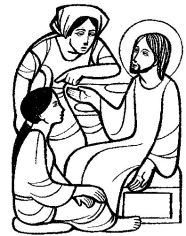
 [38] As Jesus and his disciples were on their way, he came to a village where a woman named Martha opened her home to him. [39] She had a sister called Mary, who sat at the Lord’s feet listening to what he said. [40] But Martha was distracted by all the preparations that had to be made. She came to him and asked, “Lord, don’t you care that my sister has left me to do the work by myself? Tell her to help me!” [41] “Martha, Martha,” the Lord answered, “you are worried and upset about many things, [42] but few things are needed—or indeed only one. Mary has chosen what is better, and it will not be taken away from her.”

Luke 10:38-42 NIV

According to sources writing about Jewish society and culture in Jesus time, women were much freer in Jewish society than we have often been led to believe. Many of the restrictions, like separation of men from women at worship seem to have been introduced later than the first century AD.

Nevertheless, for many of the early readers of the Gospels something quite shocking is going on in the story of Mary, Martha and Jesus.

I’ve heard many sermons which speak about the active life and the contemplative life as equally good ways to serve Jesus. I don’t really think the passage is about different kinds of Christian lifestyle…it’s about responding to the call of Jesus to use our God-given gifts and experiences to build God’s Kingdom…regardless of our gender.

“If we were first century visitors, we would have recognised the significance of something else in that story. It was customary for rabbis to sit on low pillows or chairs while they were teaching. Their disciples would sit on the ground or on mats around them. That’s how the phrase “sit at his feet” became an idiom for learning from a rabbi. In Acts 22: 3, Paul describes himself as someone who had learned “at the feet of Gamaliel” (NRSV). So when Mary was described as “sitting at Jesus feet”, she was being described as a disciple. Clearly, Jesus welcomed her as such.”

Ann Spangler and Lois Tverberg, “Sitting at the feet of Rabbi Jesus” p 14

Early gospel readers would have understood that in this story Jesus is calling Mary to follow him, a rabbi and teacher, as a disciple. Disciples were more than just followers in the sense that we often talk about ‘discipleship’ in a watered-down way today. They were chosen by the rabbi to sit at their feet, to listen and learn, to debate and question and, ultimately, to go out and teach others what the rabbi had taught them.

“The real problem between Martha and Mary wasn’t the workload that Martha had in the kitchen. That, no doubt, was real enough, but it wasn’t the main thing that was upsetting Martha…No the real problem was that Mary was behaving as if she was a man. In that culture, as in many parts of the world to this day, houses were divided into male ‘space’ and female ‘space’ and male and female roles were strictly demarcated as well. Mary had crossed an invisible but very important boundary within the house, and another equally important boundary in the social world.

Tom Wright, “Luke for Everyone” p 130

Mary and Martha

Many would have seen Mary sitting in a place generally reserved for men instead of getting on with a woman’s domestic work, which may well have been behind Martha’s complaint, “Come on Lord, get my sister to behave like a real woman!” In effect, Jesus reply, “Mary has chosen what is better…” suggests that he thought that there could be much more to being a ‘real’ woman than preparing meals, raising children and doing housework if that is what God has equipped you and called you to be (and actually, I believe that ‘real’ men can do those things too, as part of their calling to marriage and parenthood).

As Jesus travels to Jerusalem and a confrontation with the religious leaders of the day, everywhere he goes he is leaving behind evidence of just how radical, how boundary-breaking, the call to follow him must be.

If you want to share this:

  • Email a link to a friend (Opens in new window) Email
  • Print (Opens in new window) Print
  • Share on Reddit (Opens in new window) Reddit
  • More
  • Share on Threads (Opens in new window) Threads
  • Share on WhatsApp (Opens in new window) WhatsApp
  • Post
Like Loading...

Posts navigation

← Older Entries
Newer Entries →
  • Recent Posts

    • Missing the Point(er)… 22/12/2025
    • A review of “Domestic Monastery” by Ronald Rolheiser 08/08/2025
    • A review of “Faith Habits and how to form them by Emma Timms 23/07/2025
  • Archives

  • Blogs I follow

    • Downtown Monks
    • Far From Home
    • Northumbrian Collective
Website Built with WordPress.com.
Pilgrim Traveller
Website Built with WordPress.com.
  • Subscribe Subscribed
    • Pilgrim Traveller
    • Join 105 other subscribers
    • Already have a WordPress.com account? Log in now.
    • Pilgrim Traveller
    • Subscribe Subscribed
    • Sign up
    • Log in
    • Report this content
    • View site in Reader
    • Manage subscriptions
    • Collapse this bar
 

Loading Comments...
 

    %d