Pilgrim Traveller

thoughts on life’s journey…

  • About

Remember!

Posted by David Ward on 20/08/2015
Posted in: Community, Personal thoughts, Prayer and liturgy, Spirituality, Theology. Tagged: Barbara Brown Taylor, Christianity, Church, communion, Community, Eucharist, God, Jesus, Matt Redman, Northumbria Community, Rachel Held Evans, remember, spirituality, Theology. Leave a comment

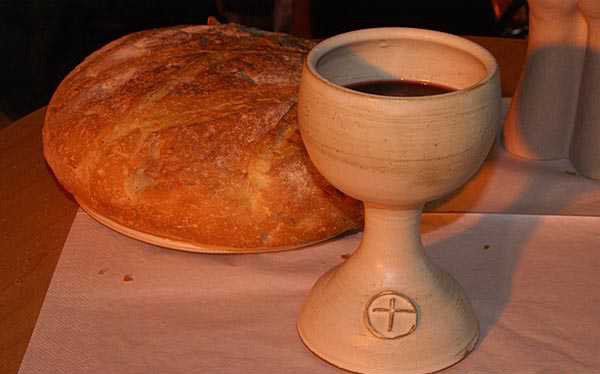
Communion bread and wine

Today I shared in the special “Remember me” meal that Jesus told us to share in for the first time in a very long time.

Although I haven’t been completely ‘church-less’ since the last time, I’ve shared in worship with the Salvation Army, who, for very understandable historical reasons, don’t celebrate communion, and although the small group that we meet with regularly loves to share food and drink together, as far as I can remember we’ve never shared that meal.

I joined the celebration at the home of the Northumbria Community, of which I used to be a very committed part, and to which I have been drawn again in the way that our life’s journey so often takes us back to places where we started out.

The tiny chapel was filled with members of the house team and people on retreat for a week or a day (like me). Many of us were complete strangers to each other, our state of grace, our joys and our struggles an irrelevant unknown as we shared a hug or handshake of peace and muttered words of blessing, some polite, some intimate. We ate from the same loaf and drank the same wine. Together we remembered the same Jesus, whatever our relationship to him might be.

Rachel Held Evans writes about the many and varied ways that we celebrate communion/Eucharist/the Lord’s Supper/Mass/the breaking of bread, with bread, crackers, special wafers, using wine, grape juice or squash from ornate chalice, Styrofoam cup or miniature plastic cups. The atmosphere, she says, may be celebratory or somber, with organ music, guitars and drums or Gregorian chants.

Then she writes:

“But in every tradition I know, someone, at some point, says, “Remember.”

Remember how God became one of us? Remember how God ate with us and drank with us, laughed with us and cried with us? Remember how God suffered for us, and died for us, and gave his life for the life of the world? Remember? Remember?” From “Searching for Sunday”

I also remember other communions I have shared in…standing in a circle in a prison chapel (I was a visitor!) drinking from the same cup as violent criminals, thieves and sex offenders (When the Pharisees saw this, they asked his disciples, “Why does your teacher eat with tax collectors and sinners?”)…the climax to rowdy, fun-filled youth weekends…in a black township church in Zimbabwe where the local white Christians never went…with people I’ve been leading on retreat, where suddenly the work that God is doing in a life comes together in a moment of challenge and resolution as the body and blood of Jesus are shared in that oh so familiar but ever powerful meal.

What a graphic demonstration of what it means to be a part of the body of Christ…

“See his body, his blood – know that he has overcome
Every trial we will face.
None too lost to be saved, none too broken or ashamed;
All are welcome in this place.”
Matt Redman “Remembrance”

There’s something very special about this very physical act of remembering Jesus…with food and drink, taste and smell and being together as the body of Christ.

Barbara Brown Taylor writes:

“With all the conceptual truths in the universe at his disposal, [Jesus] did not give them something to think about together when he was gone. Instead, he gave them concrete things to do—specific ways of being together in their bodies—that would go on teaching them what they needed to know when he was no longer around to teach them himself . . . ‘Do this,’ he said—not believe this but do this—‘ in remembrance of me.’ ” From “An Altar in the World”

The early followers of Jesus took this command very seriously. They made this special meal a central part of every gathering together, large and small in homes and public buildings.

As I sat in the tiny chapel of the Northumbria Community, listening to the sounds of nature and the crackle of the wood-burner, and studying the faces of my fellow celebrants by the flickering light of myriad tea-lights and candles’ I was almost bursting with anticipation as I waited for communion to begin. I deeply regret having been absent from the ‘remember me meal’ for so long.

If you want to share this:

  • Email a link to a friend (Opens in new window) Email
  • Print (Opens in new window) Print
  • Share on Reddit (Opens in new window) Reddit
  • More
  • Share on Threads (Opens in new window) Threads
  • Share on WhatsApp (Opens in new window) WhatsApp
  • Post
Like Loading...

We need to get out (and stay in) more…

Posted by David Ward on 01/03/2015
Posted in: Bible, Celtic Christianity, Community, Monastic spirituality, Spirituality, Theology. Tagged: balance, behaviour, belief, Charismatic, conservative, contemplation, evangelical, Mark Scandrette, orthodoxy, orthopraxy, Practising the Way of Jesus, Steve Turner. Leave a comment

belief v behaviourDuring the time I’ve been a follower of Jesus I’ve seen and experienced many tensions within the evangelical bit of the church. There can be something very positive about these tensions; sometimes they force us to reconsider our received beliefs and practices, they force us back to the scriptures with less-blinkered eyes and they result in maturity and growth, not just for individuals but for whole sections of the church.

Some of the tensions I’ve experienced include those such as Conservative v Charismatic in the way we live out our faith, those who believe that we are called to Evangelism v those who see Social Action as our priority, and those who prefer a more Contemplative style of worship to the (apparently) noisy excesses of Charismatic worship.

One of the very real dangers that I have seen developing over the last few years (although I’m sure it’s happened before…”History repeats itself…has to…no-one listens” Steve Turner) is the tension between Orthodoxy…believing the right things…and Orthopraxy…doing the right things.

Jesus himself, always ahead of the game, waded into this particular controversy with the focus of a story he told:

“So why do you call me ‘Lord,’ when you won’t obey me? I will show you what it’s like when someone comes to me, listens to my teaching, and then obeys me. It is like a person who builds a house on a strong foundation laid upon the underlying rock. When the floodwaters rise and break against the house, it stands firm because it is well built. But anyone who listens and doesn’t obey is like a person who builds a house without a foundation. When the floods sweep down against that house, it will crumble into a heap of ruins.” Luke 6:46-49 (NLT)

Of course, I know that it’s really all about balance (an over-used word); living at either extreme is definitely much less than Jesus intended.
I’m reading what I consider to be a very HARD book at the moment. It comes out of the USA, but is evidence of a welcome departure from the right wing, fundamentalist version of church that has done so much damage (especially where bits of the UK church have imported some of its teachings with a distinct lack of discernment…in my opinion). It’s ‘hard’ for me because it’s very serious about the fact that a person or community living as outposts of the Kingdom of Heaven will adopt a very distinctive, some would say subversive lifestyle. Until I’d read this book I thought I’d done a good job of balancing belief with practice.

I was at first scandalised, then encouraged, when I came across this passage:

“For the kingdom of God is not a matter of talk but of power.
1 Corinthians 4:20

The term spiritual formation, as it is often used, connotes the practice of solitary introspection, the reading of “classic” books on prayer or monthly visits to a spiritual director. Interest in these activities seems to increase with age and tends to focus, whether intentionally or not, primarily on the interior life of the individual.

While the “inner journey” aspects of spiritual formation are obviously important, they must be held in tension with the need for an active, communal pursuit of the way of Jesus.

If there is a revolution in spiritual formation afoot, it is in our understanding of how the inward and outward aspects of discipleship to Jesus integrate with one another.

“Outward journey” practices, like service, help us recognize where we need further heart transformation in order to love more courageously.

Inward journey disciplines, such as prayer, when done appropriately, make us more aware of the Spirit’s promptings to express love in action.”
From: ‘Practising the Way of Jesus’ by Mark Scandrette

Scandalised because it appeared to criticise an element of my Christian journey that has become central to my life and work (and the things about increasing with age!); encouraged because once I got my brain in gear I realised that this is not how I live my life.
I guess I’ve never seen an emphasis on the ‘inward journey’ as an excuse for inaction…rather it is one movement in the life of faith…preceding and resourcing the ‘outward journey’.
I have found my spiritual roots in, among other things, lessons learned from Celtic monasticism. Here the monks gathered together in the monastery to prepare and gain spiritual treasure to carry out into the world beyond…in the Northumbria Community we always spoke of the Cell and the Coracle as emblems of this movement, of the rhythm of the tides of Holy Island that enclose the island for a while before opening again, allowing us to take the causeway out to the wider world beyond.
Although I have sometimes been disturbed by more recent ‘joiners’ of the Community who appear to fit Scandrette’s escapist description, the DNA of the Community that I grew into always practiced the balance of cell and coracle, of monastery and mission.
It’s a hard balance to maintain if you see it as an either all situation, but the monks of old demonstrated the wisdom of seasons of increased relationship building with God and one another to equip them for the demands of mission and work in the wider world…sometimes these may be extended times when we concentrate solely on one element, at other times we move between times of inner and outer journey in the course of every single day.
Scandrette’s most powerful point is that which reminds us that our struggles and failings as we seek to be Jesus to our friends, family and the ‘stranger’, cause us to become aware of weak and damaged areas in our lives, which in turn forces us onto the inner journey of discovery and healing with the Holy Spirit, equipping us for the return to active service. This is how we grow…

If you want to share this:

  • Email a link to a friend (Opens in new window) Email
  • Print (Opens in new window) Print
  • Share on Reddit (Opens in new window) Reddit
  • More
  • Share on Threads (Opens in new window) Threads
  • Share on WhatsApp (Opens in new window) WhatsApp
  • Post
Like Loading...

Innies, Outies and Not-Sure-Abouties…

Posted by David Ward on 11/02/2015
Posted in: Books/Articles, Communication, In the Media, Personal thoughts, Relationships, Solitude and silence, Spirituality. Tagged: "In Constant Prayer", Adam McHugh, books, communication, extrovert, introvert, Introvert Charismatic, Introverts in the Church, Mark Tanner, Marti Olsen Laney, Myers Briggs, quiet, Roy Searl, spirituality, Susan Cain, The Introvert Advantage. Leave a comment

I am an introvert.

Nowadays that doesn’t have to sound like the opening statement at an Alcoholics Anonymous meeting. It’s generally recognised that not only is it OK to be an introvert, but that they also have much to offer that compliments the more obvious characteristics of the extrovert life.

Enough books and articles have been written for most of us to have picked up that introversion is not a mental illness, not shyness gone mad and certainly not a sign of an anti-social person. It is, as my exposure to the Myers-Briggs Type indicator many years ago made me realise, more about how we are energised. The ‘innie’ is energised by the internal world of ideas, impressions and emotions; they are focussed inside their heads. They need a quiet reflective space where they can think things through and recharge themselves. Most studies seem to suggest that extroverts out number introverts 2:1, so it’s hardly surprising that until fairly recently extroversion has been prized as the way to get on and be sociable and successful…I read somewhere that most of the speculative bankers responsible for the recent crash were unrestrained extroverts, which may or may not be true but certainly made me think (and wonder where the restraining partnership of the introvert was in that scenario!)

Needless to say, our innie and outie temperament affects every part of our lives…our spirituality, the way we live out our relationship with God and others is no exception, and I’ve been doing a lot of reading around all this recently, to give me more understanding of myself, to help me see how I need to work in partnership with the extroverts around me and to be able to offer some help to those who struggle to know what contribution they can make, in leadership, in sharing ideas and in getting on in an extrovert culture (probably more true in the USA than in the reserved UK, which probably explains why so many books, and especially books on spirituality and introverts come from that culture).

So, here are a few of the books I’ve read (and am still digesting and re-reading) if you’re interested:

“Quiet” by Susan Cain – rapidly becoming a classic…mention introversion and someone is bound to ask, “Have you read…”. Pretty good summary of the science involved.
“The Introvert Advantage” by Marti Olsen Laney – nice bite-sized chapters and a great general overview.
“Quiet Faith-an introvert’s guide to spiritual survival” by Judson Edwards
“Introverts in the Church” by Adam McHugh

Both these books are written out of American church culture, which has been an incredibly extrovert culture for a long time (and has been thoughtlessly absorbed by parts of the UK church)…things seem to be changing. Addressing the differences between baseline US and UK church life is one of the reasons the author of my final suggestion wrote his book…

“The Introvert Charismatic-The Gift of Introversion in a Noisy Church” by Mark Tanner.

As I would consider myself to fall into that dual category I found this book helpful (if perhaps a bit ‘samey’ and repetitive…but then I have immersed myself in a lot of books and articles of this stuff…). I saw this book on Roy Searle’s (Northumbria Community) desk during a recent visit and he recommended it as a read (I didn’t realise he has a bit in the book!).

He also asked, “Have you read “Quiet” by Susan Cain?

Well, have you?

If you want to share this:

  • Email a link to a friend (Opens in new window) Email
  • Print (Opens in new window) Print
  • Share on Reddit (Opens in new window) Reddit
  • More
  • Share on Threads (Opens in new window) Threads
  • Share on WhatsApp (Opens in new window) WhatsApp
  • Post
Like Loading...

Posts navigation

← Older Entries
Newer Entries →
  • Recent Posts

    • Missing the Point(er)… 22/12/2025
    • A review of “Domestic Monastery” by Ronald Rolheiser 08/08/2025
    • A review of “Faith Habits and how to form them by Emma Timms 23/07/2025
  • Archives

  • Blogs I follow

    • Downtown Monks
    • Far From Home
    • Northumbrian Collective
Website Built with WordPress.com.
Pilgrim Traveller
Website Built with WordPress.com.
  • Subscribe Subscribed
    • Pilgrim Traveller
    • Join 105 other subscribers
    • Already have a WordPress.com account? Log in now.
    • Pilgrim Traveller
    • Subscribe Subscribed
    • Sign up
    • Log in
    • Report this content
    • View site in Reader
    • Manage subscriptions
    • Collapse this bar
 

Loading Comments...
 

    %d