
This may be a controversial blog post. It also feels a bit more academic than others.
What I’m trying to do is respond honestly to the passage, showing respect for it’s place in Luke’s gospel narrative, for the Greek language from which it has been translated and the Jewish context in which Jesus lived and ministered. Ultimately we are all interpretors of scripture (or lazy followers who allow others to do the interpreting for us without checking what they say…)

[20] Once, on being asked by the Pharisees when the kingdom of God would come, Jesus replied, “The coming of the kingdom of God is not something that can be observed, [21] nor will people say, ‘Here it is,’ or ‘There it is,’ because the kingdom of God is in your midst.”
[22] Then he said to his disciples, “The time is coming when you will long to see one of the days of the Son of Man, but you will not see it. [23] People will tell you, ‘There he is!’ or ‘Here he is!’ Do not go running off after them. [24] For the Son of Man in his day will be like the lightning, which flashes and lights up the sky from one end to the other. [25] But first he must suffer many things and be rejected by this generation.
[26] “Just as it was in the days of Noah, so also will it be in the days of the Son of Man. [27] People were eating, drinking, marrying and being given in marriage up to the day Noah entered the ark. Then the flood came and destroyed them all.
[28] “It was the same in the days of Lot. People were eating and drinking, buying and selling, planting and building. [29] But the day Lot left Sodom, fire and sulphur rained down from heaven and destroyed them all.
[30] “It will be just like this on the day the Son of Man is revealed. [31] On that day no one who is on the housetop, with possessions inside, should go down to get them. Likewise, no one in the field should go back for anything. [32] Remember Lot’s wife! [33] Whoever tries to keep their life will lose it, and whoever loses their life will preserve it. [34] I tell you, on that night two people will be in one bed; one will be taken and the other left. [35] Two women will be grinding grain together; one will be taken and the other left .”
[37] “Where, Lord?” they asked.
He replied, “Where there is a dead body, there the vultures will gather .”
Luke 17:20-37 NIV
A particular interpretation of this passage has given birth to a whole range of apocalyptic books and films, some questionable theology, and has been behind a particular political ideology in the US. This ‘theology’ speaks of ‘rapture’, of being left behind and great tribulation at some point before Jesus comes back.
What is most tragic is that this runs completely contrary to the wishes of Jesus, who seems to spend time discouraging the kind of fantasy-inducing theological speculation that is behind all that.
My own theology of the second coming is fairly succinct:
“Jesus is coming back…live in readiness. The rest is unhelpful conjecture!”
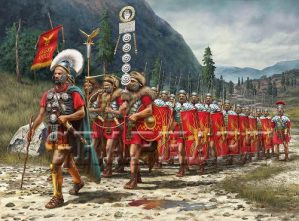
I believe the passage has much more to do with the rejection of the Son of Man (Jesus) by his own people and the coming destruction of the city of Jerusalem and the Temple by the ‘Eagles’ (same Greek word as ‘vultures’ in verse 37) of Rome in AD 70.
“We have seen time and time again in Luke that Jesus warns of the awful destruction coming upon his contemporaries for their failure to heed his message. Now he uses the ‘apocalyptic’ language of some Jewish prophecy to ram the same warning home.”
Tom Wright, “Luke for Everyone”
On a more positive side, The whole passage is, in fact, about Jesus answer to a question from the Pharisees about when the Kingdom of God was coming, implying that they thought there was a clearly organized timetable of events, so you could follow it through and predict when it would happen.
Along with a warning to not speculate, Jesus seems to say that there is no timetable. Life will go on, business as usual until the end comes, suddenly and without warning.
Then he goes on to say that the Kingdom of God is not a future event… it is already “in your midst”, although this translation doesn’t perhaps do justice to the Greek, which might be better translated “within your grasp”…it’s not just about chronology and geography, the when and where of the Kingdom, it’s also about action about having to do something.
The Kingdom of God is close, but only those who recognize who Jesus us, and choose to join up, to trust and follow him will have ‘grasped’ it. It is not enough to sit back and wait for it to happen. This is the implied action needed.
We are called to make a decision, to choose. And the focus of that decision is the Son of Man, Jesus himself, who offers all the opportunity to become part of God’s Kingdom now, not at some distant time in the future.
The key to the passage is our attitude to the Son of Man…rejection courts disaster, while trust brings us into service of God within his Kingdom.




 So, tomorrow is the first day of yet another Lent. I find that the seasons of Lent and Advent provide a wonderful and necessary focus for my monkey-mind. During Advent my focus is on waiting and watching, antidotes to both the fast-food culture of today, that has so often spilled over into our spiritual lives, and to our sense of inertia as we grapple with the tension of being people of faith moving to the rhythms of grace rather than the pressures of our culture.

 Pilgrim Traveller