
The practice of pilgrimage has its roots in the period following Constantine’s Edict of Milan in 313. It became fashionable to visit the places associated with the birth, life and death of Jesus in Palestine.
It was also adopted as part of the ascetic discipline of the Desert Fathers and Mothers.
But, early on, voices of dissent questioned the purpose and necessity of making a pilgrimage, of the notion of sacred places and of the relics that were often to be found at the destination of a pilgrimage. Here are a small selection of pre-reformation quotes:
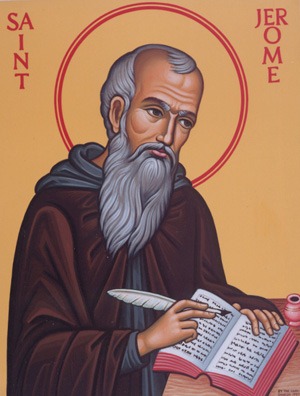
“I do not presume to limit God’s omnipotence or restrict to a narrow strip of earth him whom the heavens cannot contain…Access to the court of heaven is as easy from Britain as it is from Jerusalem…the places which witnessed the crucifixion and the resurrection profit only those who bear their several crosses, who day by day rise again with Christ.”
St Jerome (c347-420)

“Going on a pilgrimage is not something required by Christ…the grace of the Holy Spirit is not more abundant at Jerusalem than elsewhere…Rascality, adultery, theft, idolatry, poisoning, quarrelling, murder, are rife.”
Gregory of Nyssa (c335-395)

“To go to Rome is much trouble, little profit. The king whom you seek there you will not find, unless you take him with you.”
Ancient Irish quatrain.
The Council of Chalon-sur-Saone, in 813 tried to regulate pilgrimage by condemning certain sorts of pilgrim:
- Clerics who think they will be able to purge their sins by going on a pilgrimage and at the same time escape from their pastoral duties.
- Laity who think they can sin wit impunity simply by frequenting such places of prayer.
- Powerful folk who exact payment from the rest of the company under pretence of protecting them.
- Poor people whose motive is solely to have better opportunities for begging.
- Wanderers who go on one pilgrimage after another in the belief that simply to see a holy place will purge their sins.
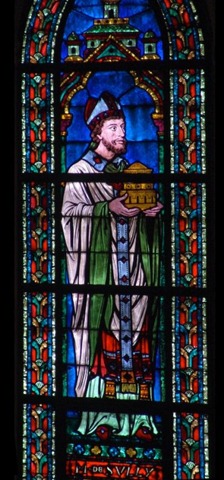
Maurice de Sully, bishop of Paris from 1160 to 1196, and founder of the cathedral of Notre Dame, said:
“God has no regard for the works of a bad Christian, for neither he nor his works pleases him…What profit can it be to go on a pilgrimage and travel far from his village if he does not travel far from sin and vice
An excellent book on the history, theology and practice of pilgrimage is John Davies, ‘Pilgrimage Yesterday and Today’, SCM Press, London 1988.

 Pilgrim Traveller
