
I’m a day late writing this post. I’ve really struggled to make sense of the story of the ruler and the coins, even though it’s similar to the parable of the ‘talents’ in Matthew.
In the end, it was reading it into the context of the journey and, especially, it’s place in the story just before Jesus rides into Jerusalem that made it make sense. There are a number of clues to the meaning of the story that make sense to me. I’m just going to give hints, otherwise this will be a very long post
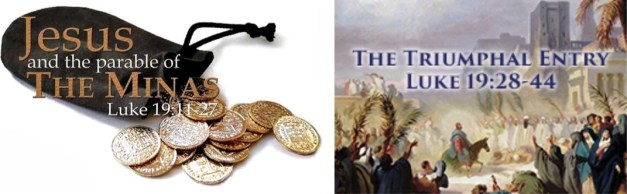
Clue number 1: The coming Kingdom
[11] While they were listening to this, he went on to tell them a parable, because he was near Jerusalem and the people thought that the kingdom of God was going to appear at once.
Luke 19:11 (NIV)
They wanted “fast-food revival”. The people of Judea had a well-developed theology of the coming of the Messiah and the Kingdom he would bring in by violence and force of arms. It turns out it was way off the mark. The parable that Jesus tells is in direct contrast to his own entry into Jerusalem as the prince of peace.
Clue number 2: Jesus telling of “God’s not like that” stories.
We’ve already encountered the stories of the Widow and the Judge and the Dishonest Steward. Jesus sets up a story about the way the world works only to contrast it with the character of God. I think that interpretations of this story that cast Jesus in the role of the returning King who takes revenge on his subjects may also miss the point. Rather, I think Jesus wants them to know that he has come to save them from that kind of fate.
Clue number 3: Current affairs
The story of the absent ruler may reflect religious opinions at the time. After the exile and return the Temple has been rebuilt, but God does not seem to have returned in his glory. Everyone is waiting in anticipation for Messiah to come. Meanwhile, worship has gone off centre and, as we will see later, the Temple has been defiled. When the King returns, will he be pleased with the way that Israel has conducted business as the people of God in his absence?
It may also reflect the political scene at the time. On the death of King Herod, his son, Archelaus became ruler of Judea. His rule was contested by both his own people and the Samaritans, who sent a delegation to Rome on two occasions to have him removed. He was a violent man who murdered many Jews. Rebellion was rife, with people wanting to throw off the yoke of Rome. Rebellion against Rome can only end one way…
[41] As he approached Jerusalem and saw the city, he wept over it [42] and said, “If you, even you, had only known on this day what would bring you peace—but now it is hidden from your eyes. [43] The days will come upon you when your enemies will build an embankment against you and encircle you and hem you in on every side. [44] They will dash you to the ground, you and the children within your walls. They will not leave one stone on another, because you did not recognize the time of God’s coming to you.”
Luke 19:41-44 (NIV)
Clue number three: Joshua and Jericho
After the Exodus from Egypt Joshua (Yeshua in Hebrew) launched his violent campaign of the conquest of Canaan (The Promised Land) from Jericho.
Jesus (Yeshua in Hebrew) launched a very different sort of ‘invasion’ from Jericho.
[9] Rejoice greatly, Daughter Zion Shout, Daughter Jerusalem! See, your king comes to you, righteous and victorious, lowly and riding on a donkey, on a colt, the foal of a donkey.
Zechariah 9:9 (NIV) (prophecy written about 500 years before the birth of Jesus)
What sort of nation had Israel become…when people looked in were the lives they lived and the worship they offered a true reflection of the character of God? Jesus didn’t seem to think so. He loved his people and was deeply distressed over just how far they had strayed. He could only see ruin and disaster ahead unless they turned back.
There is a sting in the tail, lest we become smug about our standing as followers of Jesus and the people of God. With Christians actively promoting prejudice and violence in some corners of the world, are we too in danger of obscuring, even corrupting, the image of the God we serve. It’s not a good thing to do…
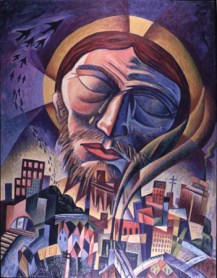
‘Man of Sorrows’ by James B Janknegt 1990


 Pilgrim Traveller