
 A couple of posts ago I wrote about my resolution to try to improve my preaching and public speaking. This has proved to be hard work…harder, in fact than I anticipated.
For one thing, when I tried to enlist the help of people from church to give me more interactive content in my talks, I wasn’t exactly overwhelmed with volunteers. I was disappointed, but I will try again when I get my nerve back.
However, not everything has been bad news.
For example, although I am still struggling to cut down the length of my sermons I have found that the amount of work that I now do on actual text of the talk has improved the content no end (judging from feedback I’m receiving). It feels sharper and I’m not quite so aware of the huge amount of waffle that used to punctuate my talks. My commitment to avoid Christian jargon wherever possible also causes me to often use several words in place of the technical term, but I continue to be commited to making the message accessible to people who don’t have a Christian background or those who haven’t had the benefit of a theological education…some of us wear our learning like a badge of office, I’m trying hard not to.
You probably won’t hear me say, “This is a quote from such and such a book/person/theologian…” very often. This doesn’t mean I haven’t done my homework, just that it doesn’t need to be there in the presentation…people can always ask about my sources if they need to and I’m happy to oblige. Hearing, understanding and doing what the scriptures teach is hard enough, without me putting another layer of distraction in people’s way.
I think my PowerPoints have become more useful, more specific and more memorable. I’ve worked really hard to make them that way. They take longer to put together but I think the result is worth it.
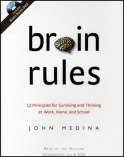 I recently read “Brain Rules” by John Medina, to brush up on the ‘latest’ findings of the brain scientists about how we learn and work. Apart from shattering several ideas I’ve long been uncomfortable with (the ability of the brain to multi-task…yes even in women…and the left brain/right brain myth, to name but two) I’ve found it educational in the realms of how to get information into the brain in the first place and how to be more certain it will be remembered more than a few hours later.
When putting together PowerPoints I’ve tried two ‘rules’ especially, and, once again, feedback suggests I’m onto something.
Rule 1 Pictures really are worth a thousand words, especially if you want people to remember after all your hard work in crafting your sermon.
Information presented with words (written, spoken or projected) alone results in a 10% memory of the presentation 72 hours later. Add pictures and the recall rate goes up to a staggering 65%. In church on Sunday I asked how many people could remember the titles of the last few talks in our “Questions about God” series…it was a struggle! I made up the titles and I could only remember one or two!! So I’m trying to use less words and more pictures on my presentation slides…once again, it takes time to find the illustrations that are just right from among the vast quantity of royalty free images on the internet.
Text alone is inefficient…if I really believe that the message from the Bible is important, then surely Sunday by Sunday I’ll use everything at my disposal to work with the way the human brain works (and lest you think I’ve forgotten, I do believe in the work of the Holy Spirit, who sometimes transcends our human limitations, but I also believe that most of the time the Spirit works through the perfectly good senses that God has given us as well).
Rule 2 Movement makes things more memorable.
I long for the day when our PA and video equipment in church is adequate to meet the communication needs of a 21st century church, so that we can use more music and video clips in our preaching, not because of the gimick appeal but because it really does help with learning and memory.
In the mean time, I’m experimenting with animation within PowerPoint presentations, trying hard not to make the movement corny or distracting but complimenting my spoken word…I think the last PowerPoint I used was beginning to get things where I’d like them to be, and the feedback has been positive. I wonder how much of last Sunday’s talk people are remembering today?
I’m also discovering that certain topics are much more difficult to illustrate satisfactorily than others, but I’m enjoying the challenge of having to try for top-notch multi-sensory content in my teaching.
The biggest encouragement, however, has been the number of people who have told me that what I’ve taught has been practical and useful, to them or the situation of a friend.
No point in having a well-prepared, focussed, illustrated message if people’s lives are not changed as a result…

 Pilgrim Traveller