
Despite the condemnation of pilgrimage by the Reformers, the metaphor of pilgrimage, the sacred journey, was not lost. Instead, the spiritual journey was simply internalised and, among other things, resulted in one of the most widely read pieces of Christian literature, next to the Bible, of all time.
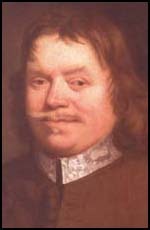 John Bunyan (1628 to 1688) was a prolific writer and the pastor of an independent Christian congregation during the Commonwealth period. After the restoration of the monarchy, with King Charles II, Bunyan was imprisoned in Bedford Gaol, as it was feared that the sort of non-conformist or Independent gatherings at which he preached were actually meetings to plot the overthrow of the monarchy again.
Although having written 4 books prior to his imprisonment, the period in prison seems to have been inspirational, as he produced 10 books during that time and several others afterwards.
After his release he went back to his congregation, but his license to preach was revoked, resulting in a further 6 months in prison in 1675/76, and it was during this time that he began the first part of the work for which he is remembered, “The Pilgrim’s Progress” which was published in 1678. The second part was written and published in 1684.
“The Pilgrim’s Progress” joins with “The Grail” and “Brendan’s Voyage” as Christian fantasy writing using the metaphor of the journey.
I thought I ought to read this classic of “life as pilgrimage”. I remember hearing it read by  one of my teachers in my primary school days, and seem to remember receiving a children’s edition as a Sunday School prize at some point in my youth. The wisdom of age told me that a book written in the 17th century would probably be full of some interesting, archaic English, so I opted for a version in Modern English.
Even so, if I read the entire work, parts 1 and 2, I am faced by the daunting prospect of 142 pages of closely packed, miniscule type if I am to reach journey’s end.
A challenging pilgrimage indeed!


 Pilgrim Traveller