I’m having a rare day off. So far, apart from catching up with some jobs in town, I’ve swapped my blog from ‘Blogger’ to ‘WordPress.com’, and although I’ve imported several of my old blog articles, this is the first completely new post here.
I’m also experimenting with using Word 2007 as a desktop blogging tool, so this may or may not successfully arrive on my blog.
As I feel more leisurely today, it occurred to me that if I continue slavishly to go through Charles Foster’s theology of pilgrimage (1) it may take some time (there are 17 points altogether) and (2) it saves you having to get the book and read them for yourself (and the book is worth reading…I’ve already shelled out for a second copy as a gift for a like-minded friend). There are links to Amazon from Foster’s website (link above).
So instead, I’m going to try to précis Foster’s theology of pilgrimage and add a few thoughts as we go along…if that’s OK?
We’ve probably already established that God seems to have a special place for the nomad, the wanderer and the pilgrim, and that pilgrim’s often find themselves with others on the margins of life, where they are perennially unpopular with the static status quo, who find pilgrims both disturbing and dangerous. God’s liking for pilgrim people comes, it seems, in part from his own experience of life on the margins, particularly during the time God stepped into human form and lived and walked among us, and that to be a follower of Jesus implies just that…following in his footsteps in the kingdom movement.
So, to continue: at its simplest, pilgrimage is purposefully wandering after God, just like the people in the Bible, including Jesus himself. And, just as Jesus did, those who follow after him often find that signs of the kingdom that favours those on the margins often spring up around their path. Not necessarily, but often! And often the kingdom things that happen are new and unexpected.
Pilgrimage is very physical. It involves effort, blisters, pain. It is a great preventative of gnosticism, which sees the body as a useless waste of time and elevates the spirit above all. We are whole people, not disembodied spirits. Our bodies are sacred and spiritual too, and we can use them to seek and to worship God. Pilgrimage also seems to help sort out a range of other failings: selfishness, bigotry, self-righteousness to name but a few. And it keeps you fit…well most of the time.
Pilgrimage is a sort of backwards journey, a journey that can restore our childlike eyes, which is just as well, as the kingdom belongs to those who come as children. It is also a journey where the journey itself actually matters more than arrival or the destination. The relationship with God is already there, it’s just that as we walk together we are constantly learning new things. And old things that we had lost are being redeemed and restored to us as we go.
The omnipresence of God does not mean, per se, that sometimes the experiencing of that presence can be stronger at some places than others. All places are sacred, but some seem to be more sacred than others (I discuss this more fully on my web site page “Touching Heaven”).
It’s also true that not everyone can go on a physical experience, in the sense of going from A to B. But a pilgrim heart and mind can be had by anyone.
Pilgrimage changes you. It is radical. A pilgrimage of just a week may make it easier to imagine what it’s like to truly abandon all things and follow Jesus; to live on the margins in the heart of the kingdom and with kingdom people. And that taste of the kingdom can be addictive even on our return.
Salvation, it must be stated, is by grace through faith, not by pilgrimage. However, pilgrimage can create the conditions where grace works best.
So, what are you waiting for? Go read the book. Then get up, go out and follow.
Condensed and adapted from “The Sacred Journey”, p XV to XVIII
If you want to share this:

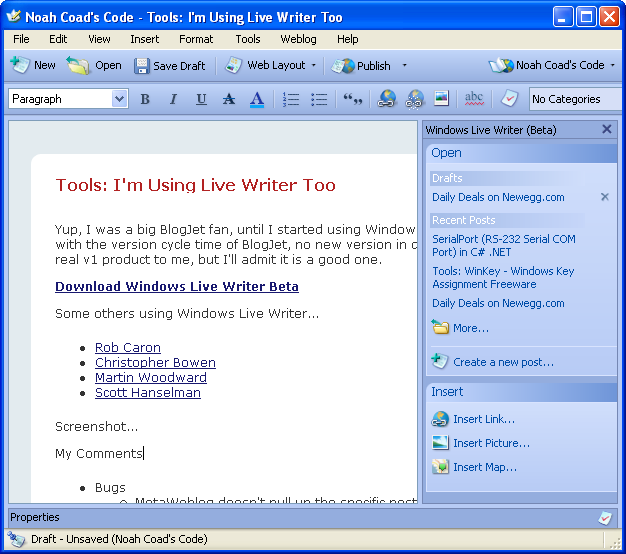 Its useful to be able to write for my blog without needing to be on line. I don’t really have money to spend on software at present, but if I did I would definitely purchase Blogjet. I tried out all sorts of free and pay-for applications, and Blogjet is way out in front.

 Pilgrim Traveller